StarCast · Wyoming's Snowy Range, WY

Night Sky Tonight in Snowy Range

Reading tonight's sky conditions…
Moon
–
Dark window
–
Galactic core
–
Conditions
–
Tonight
–
–
–
–
–
Bortle class
StarCast night sky forecast — LightCast Suite
LightCast
iOS App LightCast Suite
🌌 StarCast — night sky & Milky Way visibility
🌅 GoldCast — golden hour score & cloud forecast
🚁 DroneCast — wind & flight readiness
🌫️ FogCast — fog & mist forecasting
☁️ CloudCast — cloud cover & dramatic sky timing
Price $2.99 / mo
Free Trial 7 days
Outlook 7-day

What's in the score
Cloud cover
Moon illumination
Bortle class
Transparency
Humidity

What the app shows you
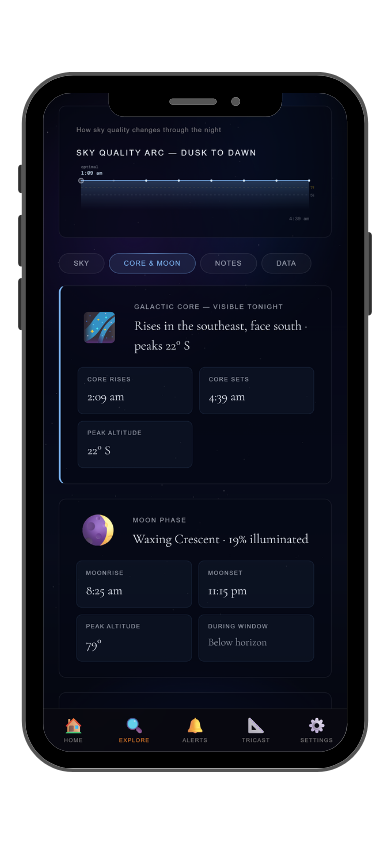
StarCast galactic core forecast
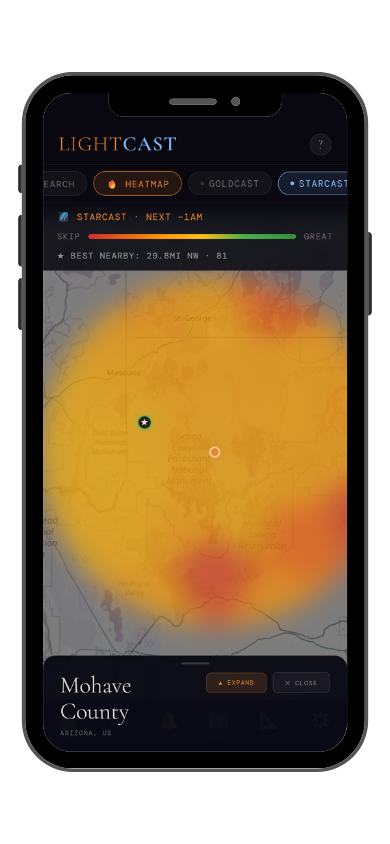
Nearby dark sky locations

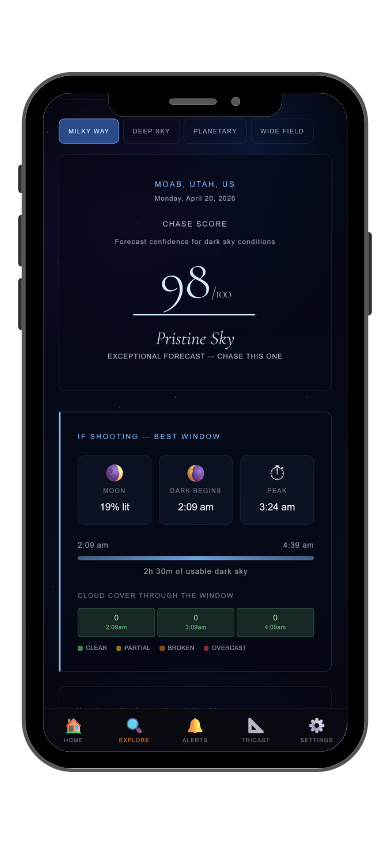
Live scores for the night sky, Milky Way Core windows, darker skies nearby, & more
Check this week's forecast


Frequently asked
Is tonight good for stargazing in Wyoming's Snowy Range?
The live score above pulls today's forecast and runs it through StarCast's scoring model, which factors in cloud cover, moon illumination, Bortle class, humidity, and atmospheric transparency. Above 70 is an excellent night. Below 40, conditions are poor. The score updates daily.
What makes Wyoming's Snowy Range good for astrophotography?
The Snowy Range rises above 12,000 feet with alpine lakes, granite peaks, and open tundra. Mirror Lake and Lake Marie sit just off Wyoming Highway 130 and provide still-water reflections with rocky peaks above. Laramie is 50 miles east but its modest glow stays well below the horizon from the high road. The Medicine Bow National Forest surrounding the range is Bortle 2-3 with exceptional transparency at elevation.
When is the Milky Way visible in Wyoming's Snowy Range?
The galactic core is visible from late March through October, though Highway 130 over the pass typically closes by November and reopens in late May. July and August are peak season: the alpine lakes are ice-free, the core arcs high overhead, and Wyoming's semi-arid climate keeps nights transparent. Early summer offers extended shooting windows where sunset and core-rise overlap.