Frequently asked
Is tonight good for stargazing at Sun Lakes-Dry Falls?
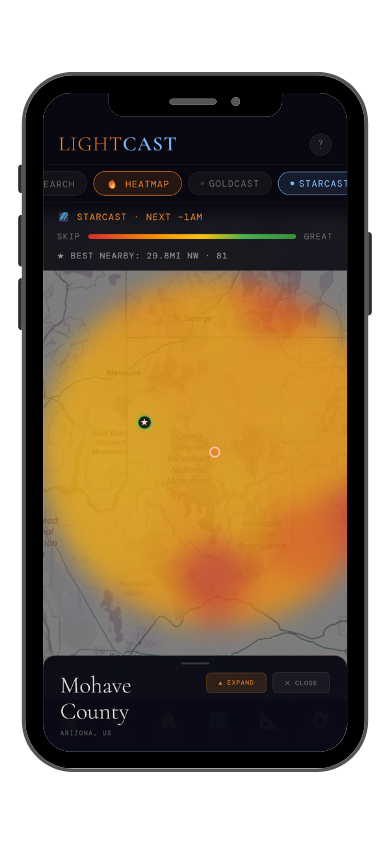
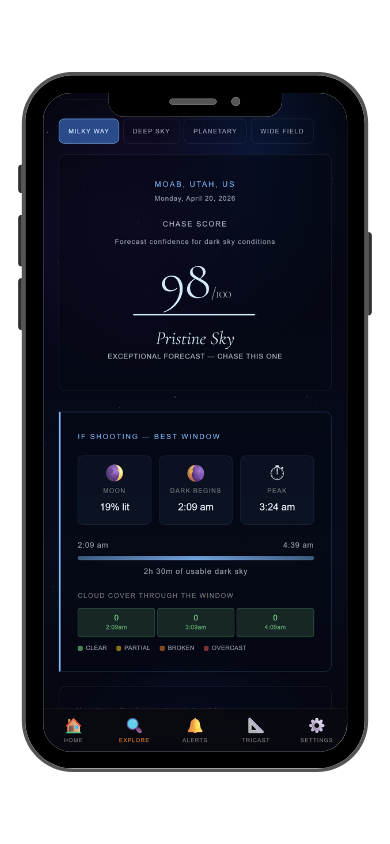
The live score above pulls today's forecast and runs it through StarCast's scoring model, factoring in cloud cover, moon illumination, Bortle class, humidity, and atmospheric transparency. Above 70 is an excellent night for astrophotography. Below 40, conditions are poor. The score updates daily.
What makes Sun Lakes-Dry Falls good for astrophotography?
Sun Lakes-Dry Falls State Park sits inside the Grand Coulee in central Washington, a massive dry waterfall channel carved by catastrophic Ice Age floods and once several times larger than Niagara Falls. Being east of the Cascade Mountains, the region sits in a rain shadow with far less cloud cover than the wetter areas around Seattle, and skies here typically reach Bortle Class 3. The coulee's sheer basalt cliffs and the string of lakes at its base give photographers dramatic vertical walls alongside still water reflections.
When is the Milky Way visible at Sun Lakes-Dry Falls?
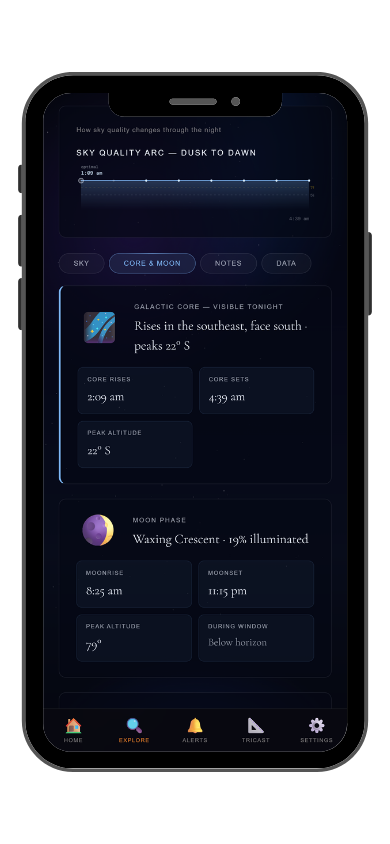
The core is visible from March through October. Summer brings the driest and clearest conditions of the year in this rain-shadow region, making it a more consistent dark sky option than most locations west of the Cascades. Spring and fall can still deliver clear nights, but Pacific storm systems are more likely to bring cloud cover during those shoulder seasons.