Frequently asked
Is tonight good for stargazing at Valley of Fire?
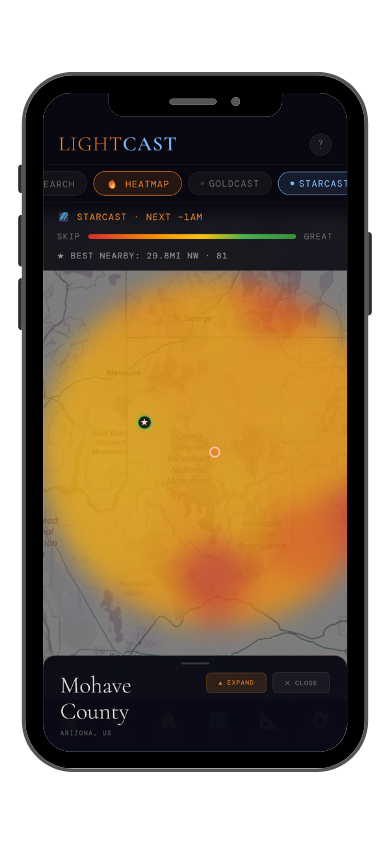
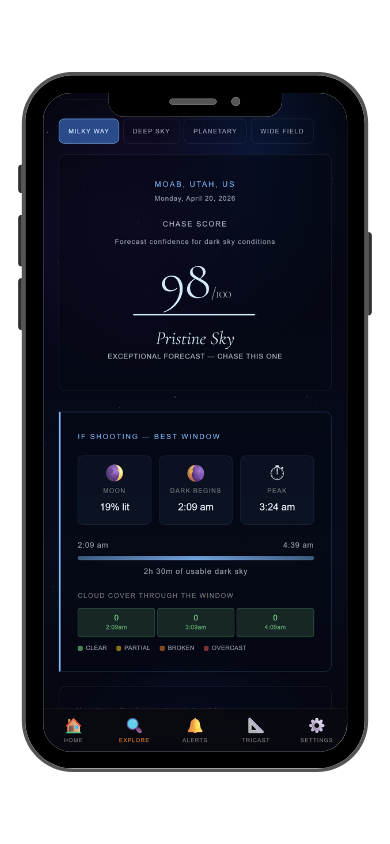
The live score above pulls today's forecast and runs it through StarCast's scoring model, factoring in cloud cover, moon illumination, Bortle class, humidity, and atmospheric transparency. Above 70 is an excellent night. Below 40, conditions are poor. The score updates daily.
What makes Valley of Fire good for astrophotography?
Valley of Fire State Park sits about 50 miles northeast of Las Vegas in the Mojave Desert of southern Nevada, at roughly 2,000 feet elevation. Despite its proximity to one of the brightest cities on Earth, the park's position in the opposite direction from the Strip means the worst of the Las Vegas light dome falls behind you when shooting south or east. The park reaches Bortle Class 3 conditions on its darkest nights. The red Aztec sandstone formations, some 150 million years old, glow vividly in long exposures under the Milky Way, producing the most visually striking rock-and-stars compositions in Nevada outside of Red Rock Canyon. The park is Nevada's oldest state park and offers 72 campsites plus two stone cabins for overnight stays.
When is the Milky Way visible at Valley of Fire?
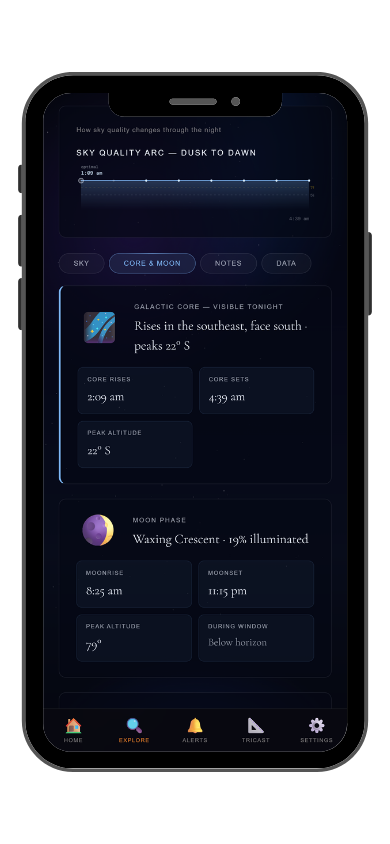
The galactic core is visible from March through October. The Mojave Desert climate keeps conditions dry and clear most of the year, with summer daytime temperatures exceeding 110°F making night photography the only practical approach in peak summer. The park hosts moon walks on full and new moons from September through May. Fall and spring offer the best combination of clear skies, manageable temperatures, and strong galactic core positioning.