Frequently asked
Is tonight good for stargazing at Vermilion Cliffs National Monument?
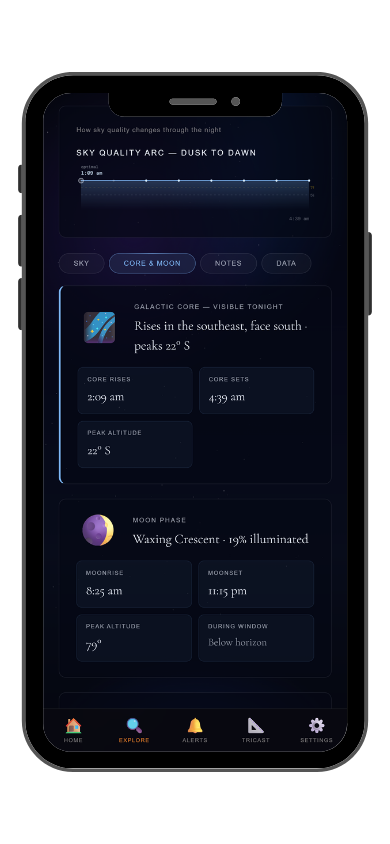
The live score above pulls today's forecast and runs it through StarCast's scoring model, factoring in cloud cover, moon illumination, Bortle class, humidity, and atmospheric transparency. Above 70 is an excellent night. Below 40, conditions are poor. The score updates daily.
What makes Vermilion Cliffs National Monument good for astrophotography?
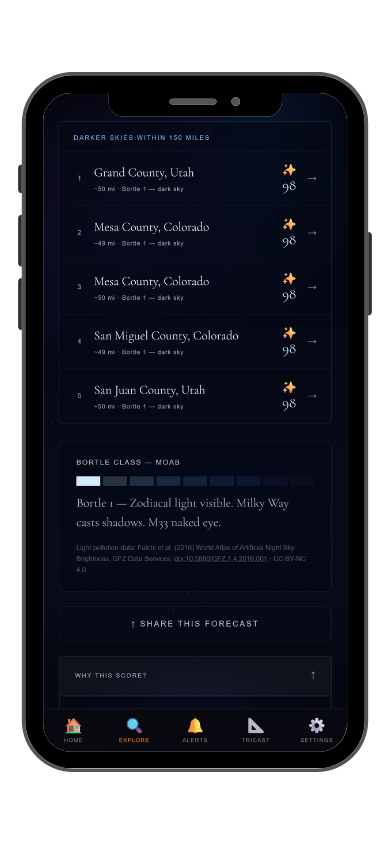
Vermilion Cliffs National Monument on the Arizona-Utah border encompasses some of the most spectacular and remote canyon country in the American Southwest, including the famous Coyote Buttes formation known as The Wave and the soaring Vermilion Cliffs escarpment. The monument achieves Bortle Class 1 to 2 skies across its remote interior — among the darkest in Arizona — due to its distance from any significant population center. The Wave's undulating red and orange sandstone bands photographed under the Milky Way are among the most sought-after compositions in landscape astrophotography worldwide. Access to The Wave is by lottery permit only, with demand vastly exceeding availability, while other areas of the monument are more freely accessible.
When is the Milky Way visible at Vermilion Cliffs National Monument?
The galactic core is visible from approximately March through October. Arizona's lack of daylight saving time means darkness arrives relatively early in summer compared to neighboring states. The high desert climate provides very high clear night frequency, and summer monsoons typically produce afternoon storms that often clear by late evening. The Wave lottery for daytime hiking permits can also sometimes be used for early morning arrivals that allow nighttime shooting in the pre-dawn hours. Spring and fall are the most comfortable seasons and deliver excellent atmospheric transparency.