Frequently asked
Is tonight good for stargazing at Voyageurs?
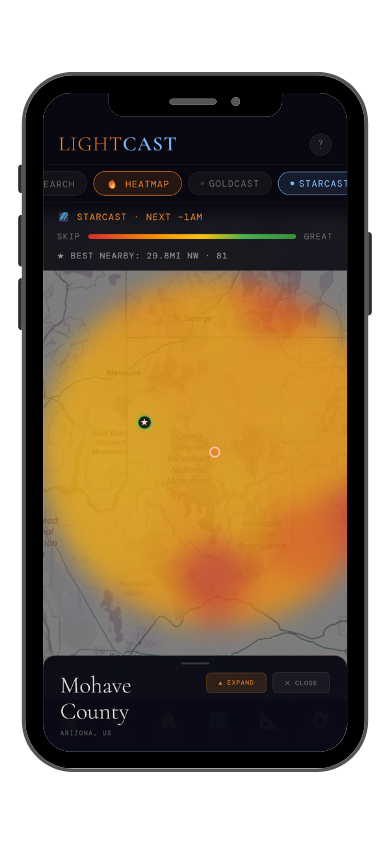
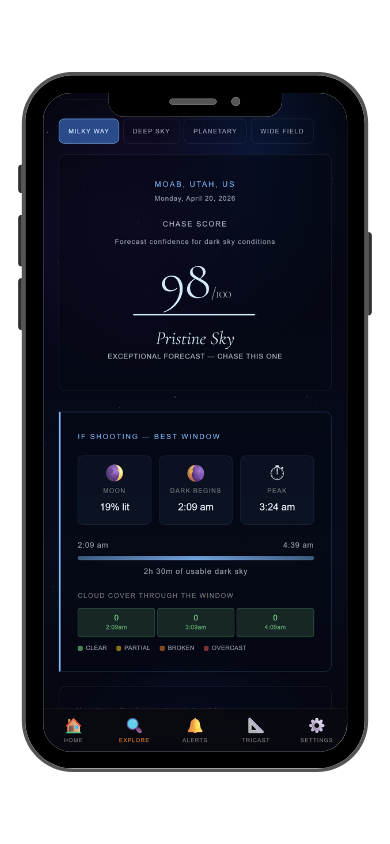
The live score above pulls today's forecast and runs it through StarCast's scoring model, factoring in cloud cover, moon illumination, Bortle class, humidity, and atmospheric transparency. Above 70 is an excellent night. Below 40, conditions are poor. The score updates daily.
What makes Voyageurs good for astrophotography?
Voyageurs National Park is a designated International Dark Sky Park along the Minnesota-Canada border, comprising 218,000 acres of interconnected lakes, islands, and boreal forest. The park's sky quality meter readings average 21.45 out of a maximum 22.0, confirming some of the darkest skies in the National Park System. Roughly 40% of the park is water, providing reflective lake surfaces for Milky Way and aurora photography across multiple large lakes including Rainy Lake and Kabetogama. The park shares a dark sky region with the Boundary Waters Canoe Area Wilderness, forming one of the largest dark sky areas in the world. The northern latitude makes Voyageurs one of the best places in the continental US to see the aurora borealis.
When is the Milky Way visible at Voyageurs?
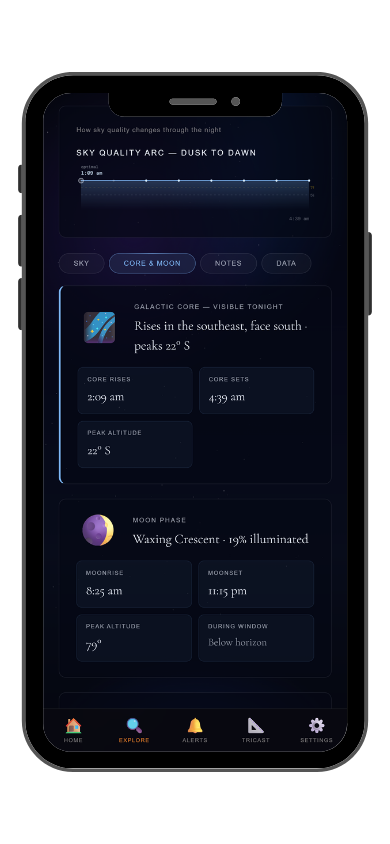
The galactic core is visible from late April through September. Aurora season runs from late August through early April, with the longest and darkest nights in midwinter. The park hosts weekly Park After Dark programs in summer and a Summer Star Party annually. Bug season in June and July is intense, so plan insect protection for long exposure sessions. Many areas of the park are accessible only by water, so boat access or water taxis are required to reach the darker interior locations.