Frequently asked
Is tonight good for stargazing at Wind Cave National Park?
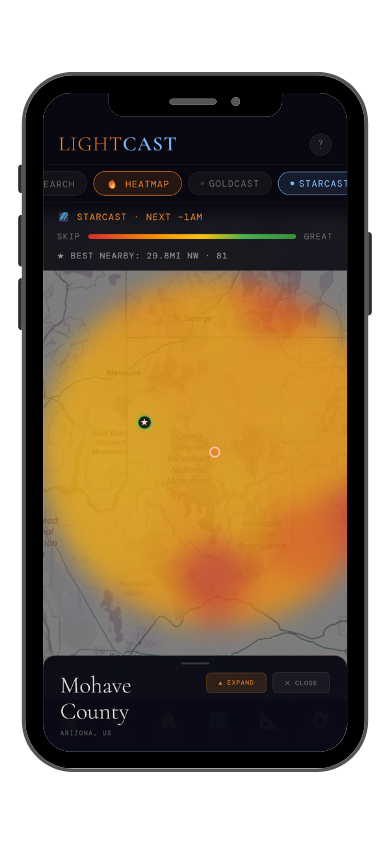
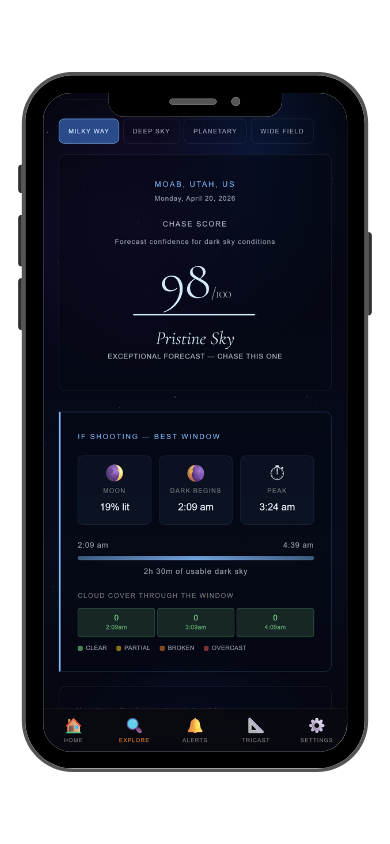
The live score above pulls today's forecast and runs it through StarCast's scoring model, factoring in cloud cover, moon illumination, Bortle class, humidity, and atmospheric transparency. Above 70 is an excellent night. Below 40, conditions are poor. The score updates daily.
What makes Wind Cave National Park good for astrophotography?
Wind Cave National Park in the southern Black Hills of South Dakota is one of the longest and most complex caves in the world, and above ground it protects a mixed-grass prairie and ponderosa pine forest ecosystem with Bortle Class 3 to 4 skies. Located directly adjacent to Custer State Park and within the broader Black Hills dark sky region, Wind Cave's open prairie meadows offer wide-angle sky views with minimal obstruction. Bison herds roam the park's grasslands freely and can become unexpected subjects in nighttime prairie photography. The park's lack of major tourist infrastructure after hours means quiet, uncrowded conditions for night photography well outside of peak summer weekends.
When is the Milky Way visible at Wind Cave National Park?
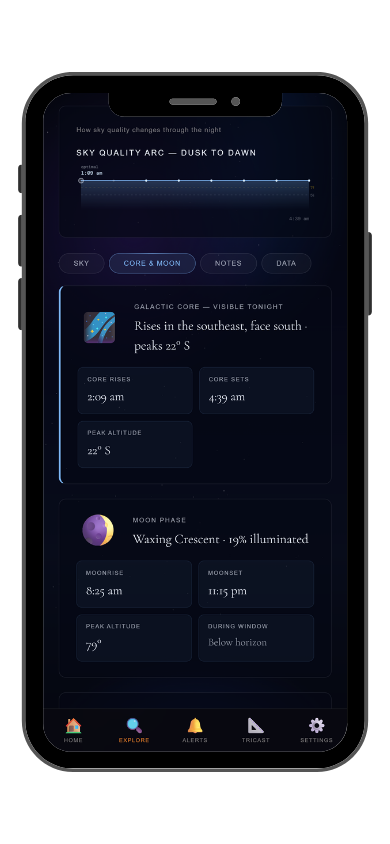
The galactic core is visible from April through October, peaking in July and August when it rises high over the southern prairie horizon. South Dakota's Black Hills location delivers more reliable clear skies than the eastern US, with summer thunderstorms that typically move through quickly and leave transparent skies in their wake. Fall brings lower humidity, excellent transparency, and cooler temperatures that extend comfortable shooting well into October. The park is open year-round and offers good access roads for nighttime visits.