Frequently asked
Is tonight good for stargazing at Wind River Range?
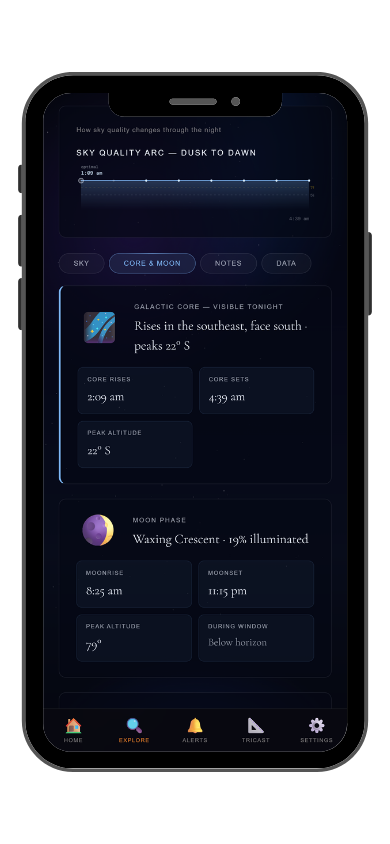
The live score above pulls today's forecast and runs it through StarCast's scoring model, factoring in cloud cover, moon illumination, Bortle class, humidity, and atmospheric transparency. Above 70 is an excellent night. Below 40, conditions are poor. The score updates daily.
What makes Wind River Range good for astrophotography?
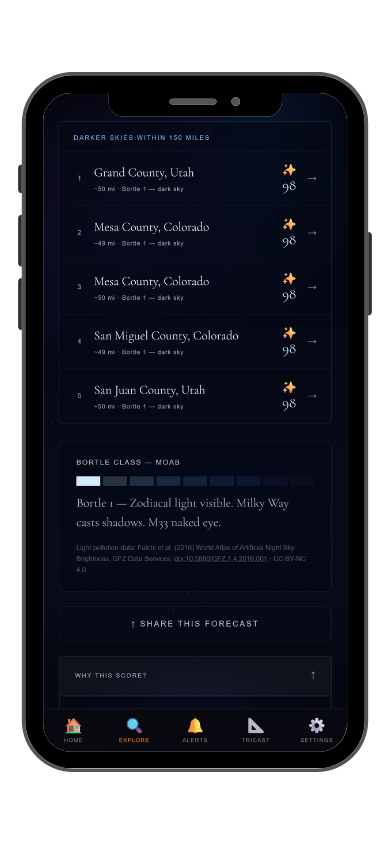
The Wind River Range stretches 100 miles across western Wyoming, containing Wyoming's highest peaks and more than 1,300 lakes. It is one of the most remote and least-visited mountain ranges in the lower 48, and the sky quality reflects that: Bortle Class 1 conditions are accessible within a few miles of most trailheads on the west slope. The Cirque of the Towers, Island Lake, and Big Sandy Lake are among the most photographed alpine locations in the American West, with granite peaks, glaciers, and alpine meadows as foreground. Many locations require backpacking in.
When is the Milky Way visible at Wind River Range?
The galactic core is visible from mid-April through mid-October. The accessible shooting season at higher elevations runs from late June through early September due to snow. July and August offer the best combination of accessible terrain, warm overnight temperatures, and peak Milky Way core altitude. The range receives afternoon thunderstorms regularly in summer, but mornings and late evenings are often calm and clear. Check trail conditions before any backpacking trip: snow can linger above 10,000 feet into early July.