Frequently asked
Is tonight good for stargazing at Wood Buffalo National Park?
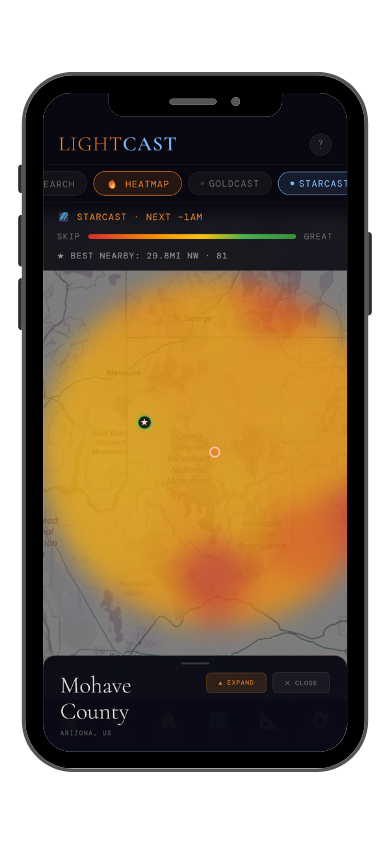
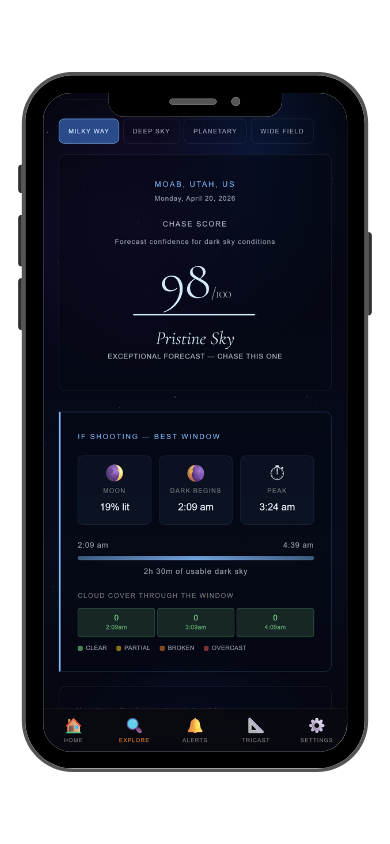
The live score above pulls today's forecast and runs it through StarCast's scoring model, factoring in cloud cover, moon illumination, Bortle class, humidity, and atmospheric transparency. Above 70 is an excellent night. Below 40, conditions are poor. The score updates daily.
What makes Wood Buffalo National Park good for astrophotography?
Wood Buffalo National Park is the largest national park in Canada and one of the largest protected areas in the world, covering an area bigger than Switzerland across northern Alberta and the Northwest Territories. It is a UNESCO World Heritage Site and a certified Dark Sky Preserve with some of the darkest skies on the continent — Bortle Class 1 readings have been recorded across its vast boreal forest and wetland interior. The park protects the world's largest inland river delta, salt plains, and one of the last free-roaming plains bison herds on Earth. Its extreme remoteness and size mean it sees very few visitors, and the night sky above its flat boreal expanse is largely unaltered by human light. Aurora displays at this sub-Arctic latitude are frequent and intense.
When is the Milky Way visible at Wood Buffalo National Park?
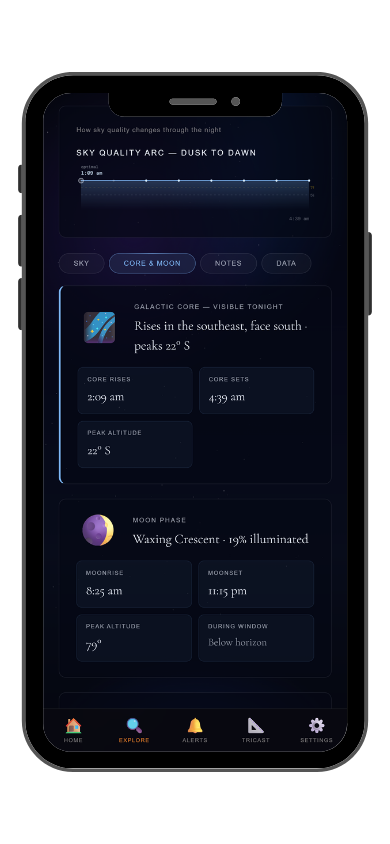
The galactic core is visible in a limited window from approximately April through September, constrained by the very short nights at this northern latitude in summer. Late August through September offers the best combination of returning darkness and galactic visibility. Aurora photography dominates the fall, winter, and spring seasons here, with displays possible on most clear nights from August through April. The park is extremely remote — the nearest town of Fort Smith is small — and access requires advance planning, making it a destination for serious wilderness photographers.