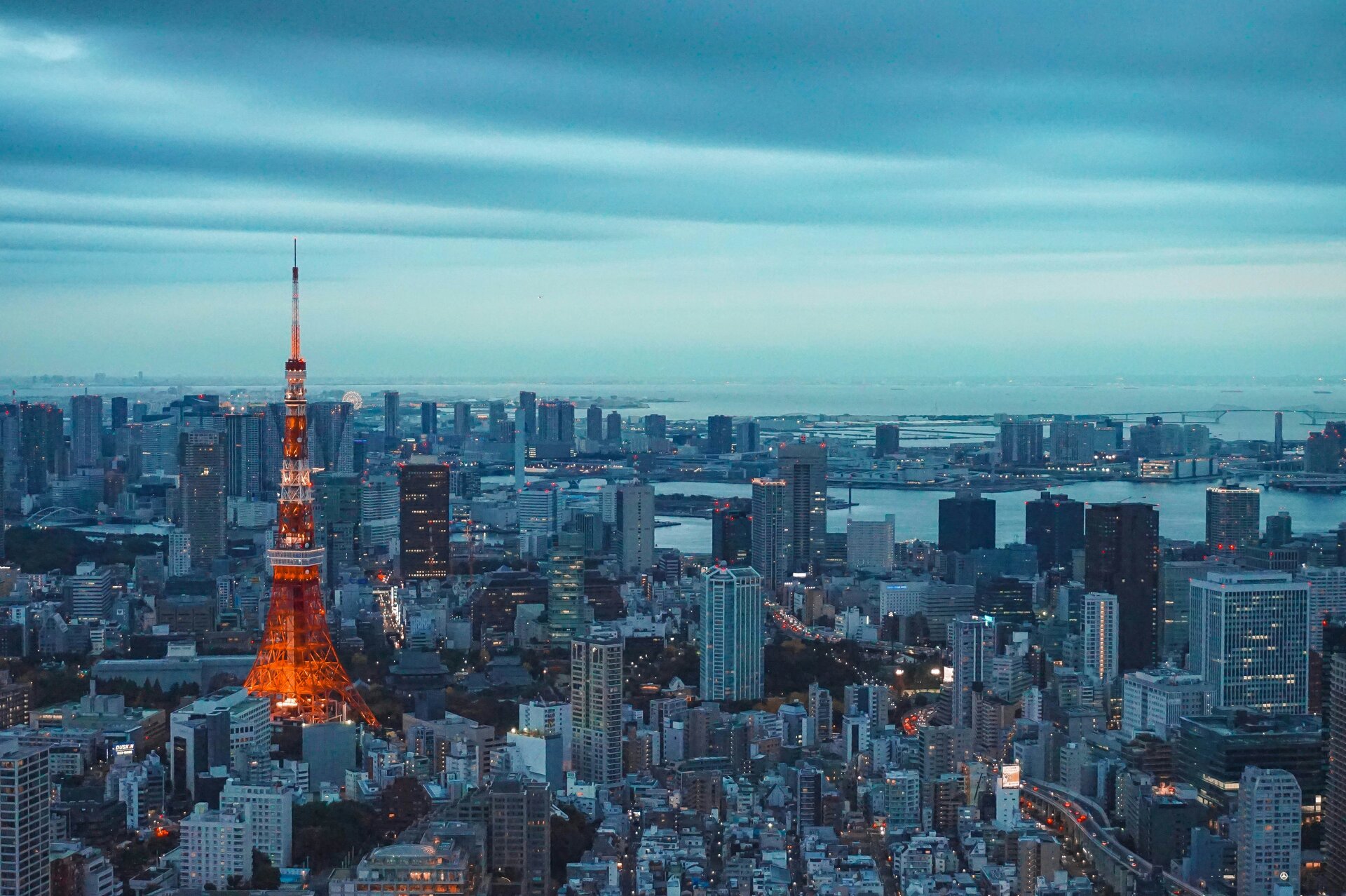
 Tokyo, Japan
Tokyo
Photography Conditions
Sunset · Night Sky · Drone Flight · Pre-loaded for Tokyo
The best rooftop sunset spot in central Tokyo. The open-air platform on top of Shibuya Scramble Square puts you directly above the crossing with a clear western horizon toward Mount Fuji. On a clear winter evening, catching the sun drop behind Fuji from here is one of the defining Tokyo photography experiences. Book ahead — it gets crowded at golden hour.
Check tonight's sunset →One of Tokyo's best-kept open secrets: free entry, 202m elevation, and a wide westward view toward Fuji. The north and south towers both have observation floors. Sunrise from the east tower catches the first light on the city's endless low-rise sprawl stretching to the bay. On clear days the view to Fuji is unobstructed and genuinely spectacular.
Check golden hour timing →Tokyo's best inner-city park for garden photography. In late March and early April the cherry blossoms peak here, and early morning light through the trees before the crowds arrive is exceptional. Autumn brings strong foliage color in November. The garden is large enough to find quiet corners even on busy days — arrive at opening for the best light and fewest people.
Check sunrise forecast →The most iconic dark sky destination from Tokyo. Lake Kawaguchiko and Lake Yamanakako give direct foreground views of Mount Fuji with star-filled skies above. The Bortle 4–5 conditions are good enough for wide-angle Milky Way shots with Fuji in the frame on new moon nights from April through September. The drive is about 90 minutes from central Tokyo.
Check Fuji Five Lakes tonight →| Location | Distance | Bortle | Best for | |
|---|---|---|---|---|
| Okutama Mountains | 70 km west | 5–6 | Quick escape, forest foreground | Starcast → |
| Fuji Five Lakes | 100 km west | 4–5 | Milky Way over Fuji, lake reflections | Starcast → |
| Izu Peninsula | 150 km southwest | 4–5 | Coastal stars, sea horizon | Starcast → |
| Mount Yatsugatake | 200 km west | 3–4 | High elevation, serious dark sky | Starcast → |
- Late March to early April is the peak window for sakura: Shinjuku Gyoen, Ueno Park, and Chidorigafuchi are the top spots
- Arrive at parks before opening — the combination of early morning light and empty paths is worth the early start
- Spring haze builds as temperatures rise: the clearest Fuji views tend to come right after cold fronts push through
- Golden hour extends noticeably through May, giving more time to work multiple locations in one evening
- Tsuyu (rainy season) runs roughly mid-June through mid-July: heavy overcast and rain make consistent shooting difficult
- After tsuyu lifts, heat and humidity build fast — visibility drops and Fuji disappears behind haze most days
- Early morning in July and August is the window: clear air before the heat builds, dramatic thunderstorm clouds by afternoon
- Fireworks festivals (hanabi) run July and August and offer spectacular subjects — research dates and positions in advance
- September and October bring Tokyo's clearest skies of the year: humidity drops and Fuji views return reliably
- Autumn foliage peaks in mid to late November at Shinjuku Gyoen, Rikugien, and Koishikawa Korakuen
- The combination of clear air and low sun angle in October makes this the best month for elevated cityscape work
- Typhoon season runs through October: fronts pass quickly but can leave dramatic skies in their wake
- December through February is the best time for Fuji views from the city: dry winter air and strong northwest winds clear the atmosphere
- Sunrise comes late in winter — around 6:50 AM in December — making early morning shoots more accessible
- The low winter sun creates long shadows and raking light across the city's dense low-rise neighborhoods
- Snow on Fuji's summit is at its deepest in February and March, making the mountain more dramatic in frame
