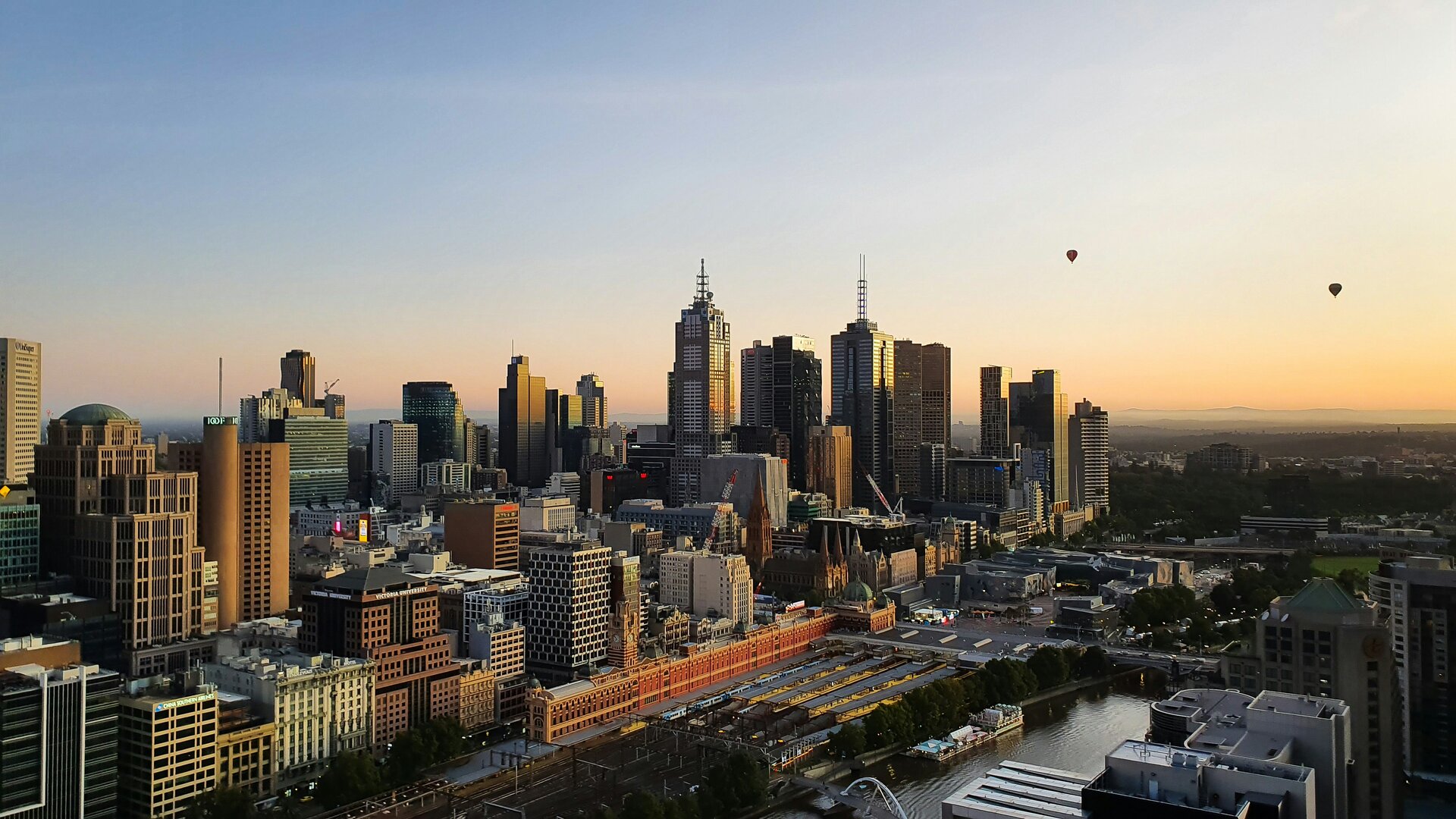
 Melbourne, Australia
Melbourne
Photography Conditions
Sunset · Astrophotography · Drone Flight · Pre-loaded for Melbourne
The Yarra River waterfront gives the classic Melbourne CBD composition. Shoot from the north bank (Southbank promenade) facing north toward Flinders Street Station and the CBD at sunset — the sky to the west lights the buildings from the side. The Princes Bridge itself is a strong compositional element. At sunrise shoot from the south bank looking east along the river as first light catches the Federation Square facade and the Flinders Street dome. The waterfront is accessible and always open; no elevated access required.
Check tonight's sunset →The Williamstown foreshore gives the broadest unobstructed view of the Melbourne CBD skyline across Port Phillip Bay. At sunset the entire skyline is silhouetted or side-lit against the western sky with the bay below. The old lighthouse and historic fishing boats add foreground structure. Shoot from the Nelson Place promenade or the more elevated Jawbone Marine Sanctuary area slightly north. Ferry from the CBD to Williamstown runs regularly and gives a different approach perspective.
Check Williamstown forecast →The St Kilda breakwater pier stretches into Port Phillip Bay facing north — at sunrise the CBD skyline is illuminated across the bay while the pier foreground leads the eye in. The resident Little Penguin colony returns to the breakwater rocks around dusk every evening year-round — a unique wildlife foreground for blue hour. The Luna Park facade and the Palais Theatre add architectural character for wider angle shots along the esplanade. Keep a respectful distance from the penguins and avoid flash photography.
Check St Kilda conditions →World-class dark sky 240 km west of Melbourne. The Grampians sandstone ranges give dramatic rock formation foreground with Bortle 2–3 skies. The Milky Way core rises in the north October through April — shoot north from the Boroka Lookout or MacKenzie Falls area with the sandstone ridgeline below. The Halls Gap village is the base for access. Drive 3 hours from Melbourne; the effort is well worth it for any serious astrophotography. The New Moon in November to March gives the best Milky Way windows.
Check Grampians tonight →| Location | Distance | Bortle | Best for | |
|---|---|---|---|---|
| Dandenong Ranges | 40 km east | 5–6 | Near-city escape, fern gully foreground | Starcast → |
| Mornington Peninsula (southern tip) | 100 km south | 4–5 | Southern Ocean horizon, coastal cliff foreground | Starcast → |
| Macedon Ranges | 70 km northwest | 4–5 | Highland plateau, open paddock foreground | Starcast → |
| The Grampians (Gariwerd) | 240 km west | 2–3 | World-class dark sky, sandstone formations | Starcast → |
- March through May: consistent post-frontal clarity, vivid golden hour light on the CBD and bay
- April is often Melbourne's finest photography month: cool, clear, and manageable crowds
- Milky Way core still visible in March and April before setting for winter — Grampians trips viable
- Autumn foliage in the Dandenong Ranges and Macedon Ranges peaks in late April
- Southern winter golden hour: sunset around 5:10 PM AEST in June — brief but the low sun is exceptional quality
- Southern Ocean fronts bring rapid sky changes — post-frontal clearing produces the highest Goldcast scores of the year
- Milky Way core is below the horizon: full focus on golden hour and long-exposure city work
- Best star transparency of the year on high-pressure winter nights
- October: Milky Way core rises in the north again — Grampians and Mornington Peninsula trips resume
- Wildflowers across the Grampians, Dandenongs, and Macedon Ranges peak September through October
- Humpback whale migration passes the Victorian coast in spring and autumn
- November: weather is warmer but Southern Ocean fronts still create dramatic sky events
- Sunset at 8:45 PM AEDT in December — the longest shooting windows of the year
- Milky Way peaks December through February: Grampians new moon nights are exceptional
- Heatwaves (40°C+) can occur suddenly; bushfire smoke from regional fires reduces visibility
- Post-storm clarity after a cool change passes through can produce extraordinary golden hour conditions