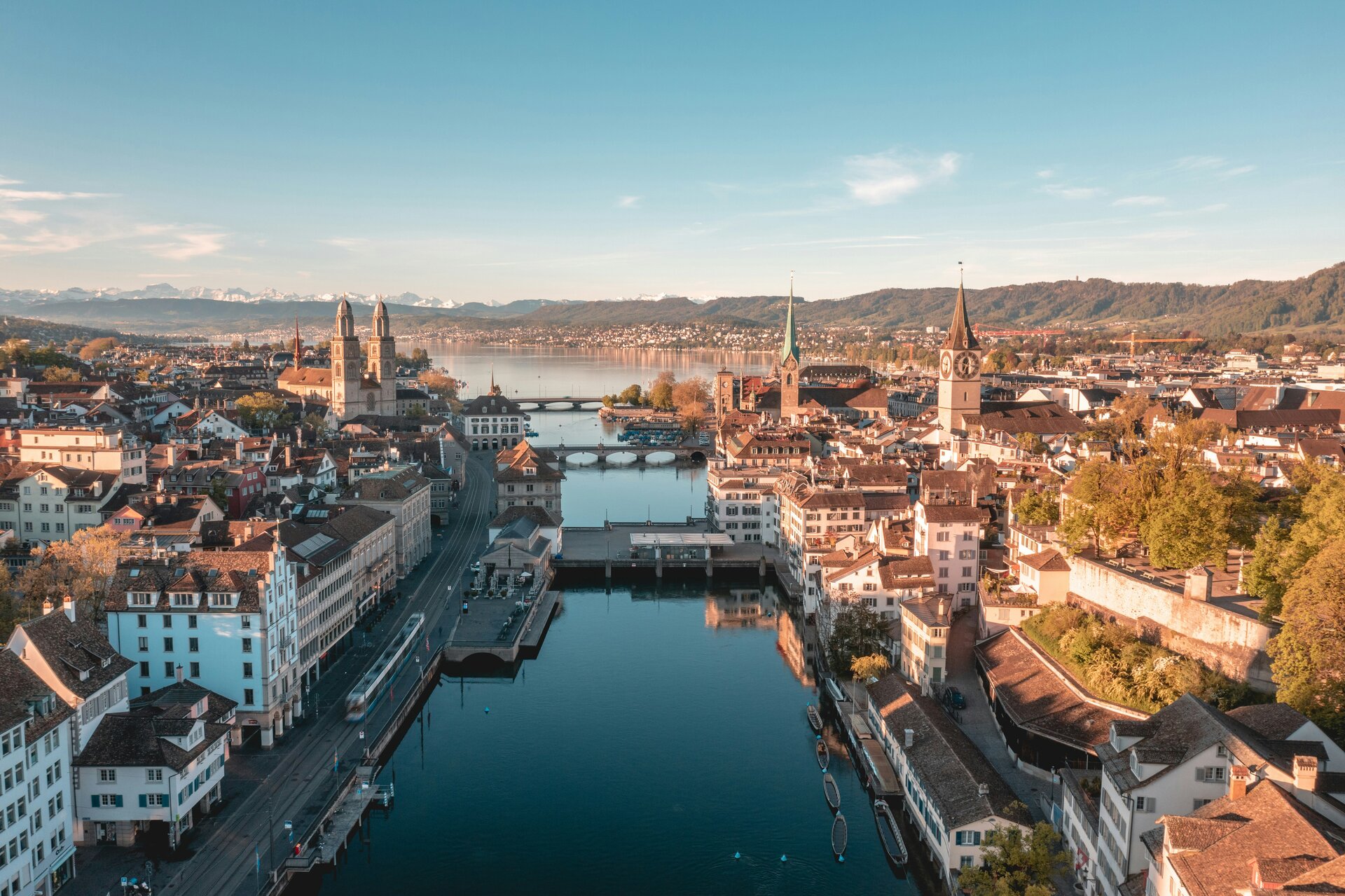
 Zurich, Switzerland
Zurich
Photography Conditions
Sunset · Astrophotography · Drone Flight · Pre-loaded for Zurich
The most complete viewpoint accessible from the city. The summit platform looks east over Lake Zurich with the Alps — Säntis, Glarus, and on clear days the Bernese Oberland — as a full panoramic backdrop. In winter the summit frequently rises above the Hochnebel fog layer while the city below is grey: a world of fog sea, clear sky, and Alpine glow. Take the S10 from Zurich HB to Uetliberg station, then 10 minutes on foot to the tower. Goldcast scores above 70 here produce exceptional results.
Check tonight's sunset →The east shore of Lake Zurich between the city and Rapperswil gives long waterline compositions with the Alps as a western backdrop at sunset. Villages like Stäfa and Meilen have waterfront promenades with direct Alpine views across the lake. At sunrise facing east, mist rises off the water with the first light catching the Glarus Alps. The S-Bahn connects multiple lake villages from Zurich HB in 20–40 minutes.
Check lake shore forecast →Multiple elevated points on the Zürichberg hill east of the Limmat give views over the old town roofline toward the lake and Alps. The Lindenhügel area and the ETH Zurich terrace offer the classic Zurich composition: Grossmünster and Fraumünster towers in the foreground, Lake Zurich beyond, and the Alps on the southern horizon. Accessible on foot from the old town in 20 minutes. The ETH terrace is open and free.
Check old town conditions →The Jura ridge northwest of Zurich rises to 1,200–1,400 m and offers Bortle 4–5 skies with open southern horizons toward the Alps. The Weissenstein ridge near Solothurn (1,400 m) is a popular dark sky location with cleared meadows and panoramic views. Drive 40–50 km from Zurich in under an hour. Milky Way core shoots south across the Alps May through September. Check Starcast before driving — Mittelland valley fog doesn't always extend to the Jura ridge.
Check Jura tonight →| Location | Distance | Bortle | Best for | |
|---|---|---|---|---|
| Jura Ridge (Weissenstein) | 50 km northwest | 4–5 | Panoramic Alps view, accessible ridge | Starcast → |
| Pre-Alps (Glarus/Schwyz) | 60 km southeast | 3–4 | Alpine valley dark sky, lake foreground | Starcast → |
| Graubünden (Engadin) | 150 km southeast | 2–3 | World-class Alpine dark sky, lake reflections | Starcast → |
| Bernese Oberland | 120 km southwest | 2–3 | Eiger/Mönch/Jungfrau as foreground | Starcast → |
- March and April: Hochnebel fog season fading, Uetliberg trips above the clouds become more reliable
- Alpine snowline still high in May — the contrast of snowy peaks behind Lake Zurich is outstanding
- Milky Way core returns in April; Jura and Graubünden trips viable on new moon nights
- May is often the clearest month of the year: consistent high-pressure blocks, vivid Alpine light
- Sunset at 9:00–9:15 PM CEST in June and July — the longest usable evening light of the year
- Milky Way core peaks July through August: Engadin and Bernese Oberland trips reward the drive
- Lake Zurich on calm summer evenings: perfect Alpine reflections and warm light on the water
- Afternoon thunderstorms common July and August — check Goldcast as fronts clear quickly and can produce vivid post-storm light
- October and November: Hochnebel fog fills the Mittelland below 600–800 m — Uetliberg rises above it into clear Alpine light
- Fog sea at Uetliberg on a high-pressure autumn morning is one of Switzerland's signature photography conditions
- Alpine foliage in October: larch forests in Graubünden turn gold around the second week of October
- Last viable Milky Way window: October core sets earlier each week through the month
- Peak fog sea season: the city can be grey for weeks while Uetliberg is in brilliant sun above the clouds
- Golden hour arrives around 4:00 PM CET in December — brief but the low sun on snow-covered Alps across the lake is exceptional
- Snow on the old town rooftops and lake shore is irregular but transformative — watch 10-day forecasts
- Best star transparency of the year on clear nights above the fog layer