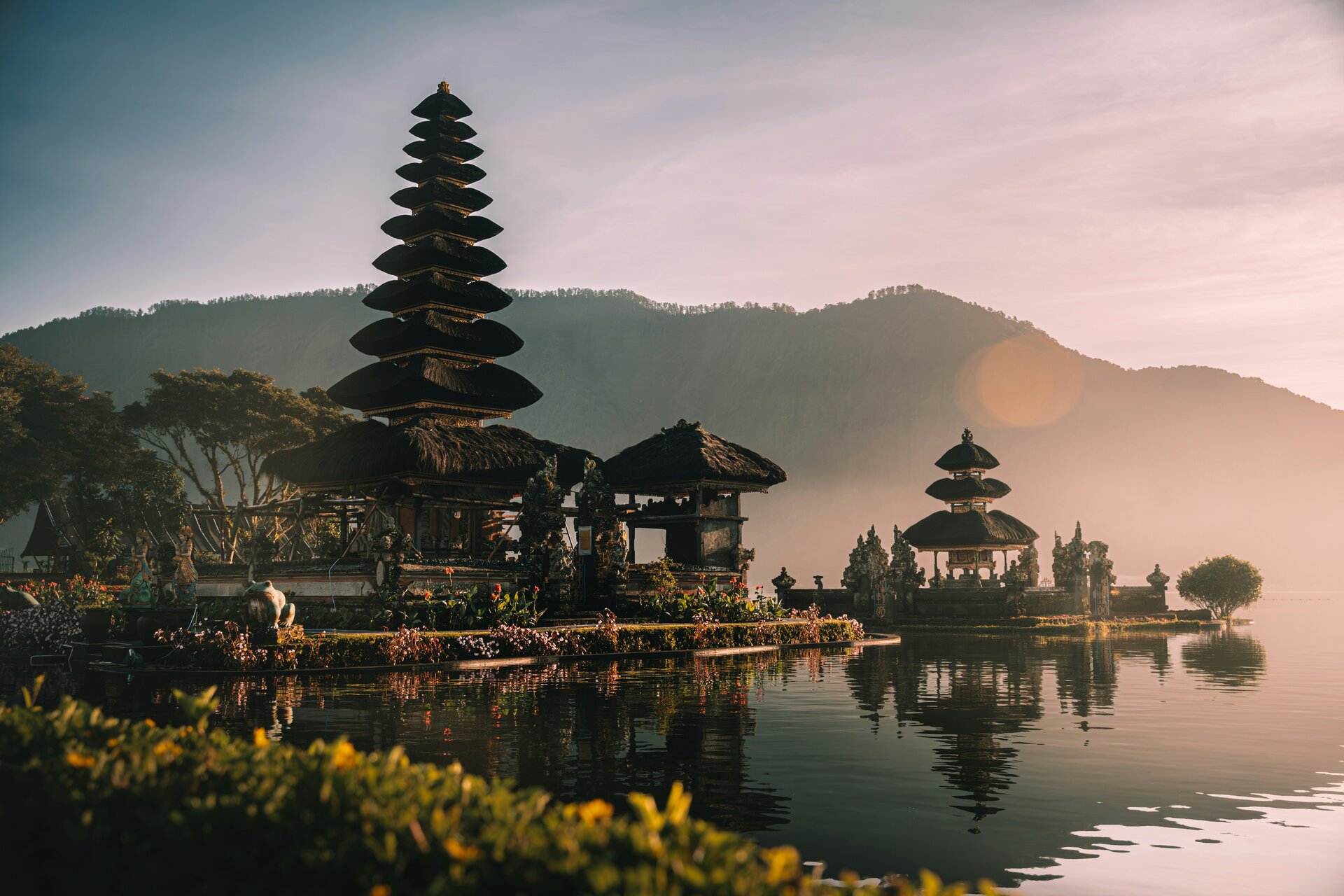
 Bali, Indonesia
Bali
Photography Conditions
Sunset · Astrophotography · Drone Flight · Pre-loaded for Bali
The most photographed sunset in Bali. The 16th-century sea temple sits on a rocky offshore islet accessible only at low tide — at sunset the silhouette of the temple against the orange Indian Ocean sky is one of the iconic images of Southeast Asia. Check the tide table before visiting: the causeway floods at high tide and the composition changes entirely depending on water level. Arrive 60–90 minutes early in high season (July–August) as the viewing area fills. The adjacent clifftop gives an elevated angle. Entry to the temple grounds requires a ticket; the best photography positions are in the public areas nearby.
Check tonight's sunset →The Uluwatu sea temple sits on a 70 m limestone cliff at the southwestern tip of the Bukit Peninsula, directly facing the Indian Ocean sunset. The cliff face and the temple gates frame the setting sun in the final 20 minutes of golden hour. The Kecak fire dance performance runs at sunset most evenings — the dancers silhouetted against the burning orange sky is extraordinary and requires no additional positioning. The clifftop path gives multiple vantage points north and south of the temple entrance. Beware the resident macaques — they are notorious for taking cameras and glasses.
Check Uluwatu conditions →The most popular volcano trek in Bali. The 2-hour hike starts at 4 AM and reaches the summit at 1,717 m in time for sunrise — on clear days the view extends across the caldera lake, Mount Abang, and toward Mount Agung to the east. The Milky Way is visible from the summit in the hours before dawn on new moon nights (core in the north, October through April). A licensed guide is mandatory. The path is well-trodden but steep in sections — headlamps, warm layers, and solid footwear required.
Check Mount Batur conditions →The UNESCO-recognised subak irrigation system terraces north of Ubud are best photographed in early morning before the tour groups arrive from 9 AM onward. Sunrise at the terraces: soft directional light rakes across the stepped rice fields while mist hangs in the valley below. The terraces are most photogenic when flooded (wet season, November–March) — the water reflects the sky and doubles the visual depth of the composition. Multiple paid access points along the ridge give different elevations and framings. Go before 7:30 AM for crowd-free shooting.
Check Ubud conditions →| Location | Distance | Bortle | Best for | |
|---|---|---|---|---|
| Mount Batur summit | 65 km northeast | 4–5 | Caldera lake foreground, pre-dawn Milky Way | Starcast → |
| Munduk highlands | 80 km north | 4–5 | Misty mountain villages, Bortle 4–5 | Starcast → |
| East Bali coast (Amed) | 100 km east | 4 | Ocean horizon, Mount Agung silhouette | Starcast → |
- May through October: afternoon cloud burns off reliably, Goldcast scores peak at Tanah Lot and Uluwatu
- July and August are peak tourist months — arrive early at all popular spots, especially Tanah Lot and Tegalalang
- September and October are the sweet spot: conditions still excellent, crowds beginning to thin
- Dry rice terraces are less photogenic but the light quality across the highland landscapes is excellent
- April is the final dry month — conditions still good and significantly fewer tourists than peak season
- November: wet season beginning but showers are often brief afternoon events that clear before sunset
- Milky Way returns in October/November: Mount Batur pre-dawn sessions viable on clear new moon nights
- Rice terrace flooding begins in November — Tegalalang starts to look its most photogenic
- Tegalalang and Jatiluwih rice terraces are fully flooded December through February — the most photogenic condition
- Waterfalls (Sekumpul, Gitgit, Kanto Lampo) are at maximum flow after heavy rain
- Afternoon thunderstorms typically clear by early evening — post-storm golden hour can be extraordinary
- Milky Way core is up (southern hemisphere, core rises in north) but wet season cloud limits clear nights significantly
- Nyepi (Balinese New Year, typically March) is the Day of Silence: the entire island shuts down for 24 hours
- No lights, no movement outdoors, no airport operations — the night of Nyepi is the darkest night of the year in Bali
- The Ogoh-Ogoh parade the evening before Nyepi (Pengrupukan) fills the streets with ceremonial giants and fire torches
- Photography during Nyepi itself is restricted to your accommodation grounds — plan accordingly