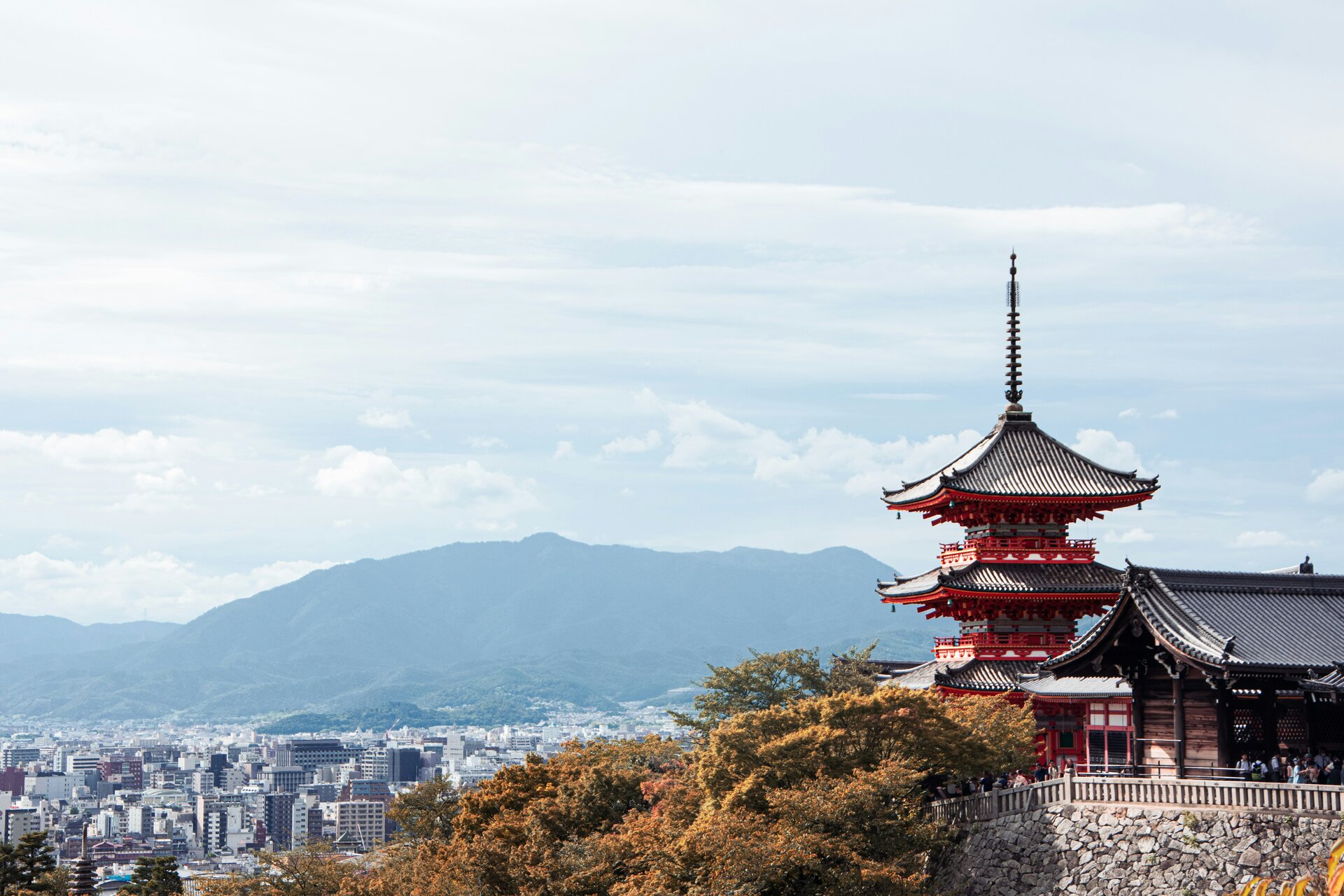
 Kyoto, Japan
Kyoto
Photography Conditions
Sunset · Astrophotography · Drone Flight · Pre-loaded for Kyoto
The bamboo grove is best in diffuse morning light before 7 AM — direct sun creates harsh contrast between the stalks. Togetsukyo Bridge 500 m south is Kyoto's best western-horizon composition: the Arashiyama mountains frame the sky behind the bridge at sunset. Autumn momiji foliage on the hillside peaks mid-November and turns the entire scene copper-red.
Check tonight's sunset →The torii gate trail is open all night. Before sunrise is the only time to photograph the lower gates without crowds. Hike 25 minutes to the Yotsutsuji mid-mountain junction and face north: Kyoto city spreads below while the sky lightens over the eastern Higashiyama ridge. Blue hour here is exceptional and rarely photographed at this elevation. The trail is exposed — rain makes the stone steps dangerous.
Check sunrise forecast →An underused vantage east of Kyoto University. Hike 15 minutes through the wooded Yoshida Jinja shrine grounds to the summit and look west over the city. At sunset the low sun hits mid-city temple rooftiles and the Daimonji hillside bonfire character faces you directly. No entry fee, rarely more than a handful of people. One of Kyoto's best-kept sunset positions.
Check sunset conditions →Drive 80 km north through the mountains to reach the Sea of Japan coast. The Tango Peninsula has minimal development and Bortle 4 skies with open ocean horizon. Milky Way core rises in the south June through August — shoot with fishing village harbors as foreground. The Amanohashidate sandbar viewpoint is also worth including for a sunset stop on the drive out.
Check Tango Peninsula tonight →| Location | Distance | Bortle | Best for | |
|---|---|---|---|---|
| Tango Peninsula | 80 km north | 4 | Sea of Japan horizon, harbor foreground | Starcast → |
| Yoshino Mountains (Nara) | 60 km south | 3–4 | Mountain dark sky, cedar forest foreground | Starcast → |
| Hyogo Highlands | 80 km west | 4–5 | Open plateau, wide-field Milky Way | Starcast → |
| Ise-Shima Coast (Mie) | 130 km southeast | 3–4 | Pacific ocean horizon, torii gate foreground | Starcast → |
- Late March to early April: sakura at Maruyama Park, Philosopher's Path, and Arashiyama — arrive before 6 AM
- Milky Way core returns in April; Tango Peninsula and Yoshino are accessible on new moon nights
- Valley mist in April creates atmospheric conditions at Arashiyama at dawn
- May is excellent: blossom gone, crowds drop, light quality improves significantly
- Rainy season (tsuyu) mid-June through mid-July: cloud and humidity dominate, but mist on temple gardens is striking
- Post-rainy season (late July–August): Milky Way core peaks from the Tango Peninsula and Yoshino
- Gion Matsuri festival in July: lantern-lit streets at blue hour are exceptional and unique to this window
- Heat and humidity reduce sunset color quality — check Goldcast score before committing to a shoot
- Mid-November foliage peak at Eikan-do, Tofuku-ji, and Arashiyama: crowds are large but the color is world-class
- September clarity is excellent — transition from summer humidity, Goldcast scores improve sharply
- Low-angle October sun catches temple moss and raked gravel in exceptional light all day
- Crowds thin significantly after foliage drops in late November — good shooting window through December
- Snow on temple rooftiles and moss gardens is rare (2–3 events per year) but extraordinary — watch 5-day forecasts
- Golden hour at 4:30 PM: brief but the raking sun on Kinkaku-ji's gold leaf is best in winter
- Fushimi Inari before dawn in winter: cold keeps everyone away, torii gates are empty
- Best star transparency of the year — cold dry air from the continent gives clear winter nights